You have probably seen thousands of pictures of individuals sitting in a chair with giant pants that look like balloons. They claim they are working on recovering their muscles, but what exactly are they using? The Normatec.
NormaTec is the leader in rapid recovery—the system gives a competitive edge to the world’s elite athletes, coaches, and trainers. The NormaTec Recovery Systems are dynamic compression devices designed for recovery. All the systems use NormaTec’s patented PULSE technology to help athletes recover faster between training and after a performance.
So how does the NormaTec actually work?
The systems include a control unit and attachments which go on the legs, arms, or hips. They use compressed air to massage your limbs, mobilize fluid, and speed recovery with the patented NormaTec Pulse Massage Pattern. When you use the systems, you will first experience a pre-inflate cycle, during which the connected attachments are molded to your exact body shape. The session will then begin by compressing your feet, hands, or upper quad (depending on which attachment you are using). Similar to the kneading and stroking done during a massage, each segment of the attachment will first compress in a pulsing manner and then release. This will repeat for each segment of the attachment as the compression pattern works its way up your limb.
The NormaTec is used to help athletes recover as quick as possible to get them ready to train again. Are you interested in trying a NormaTec? Call your local Velocity Sports Performance!
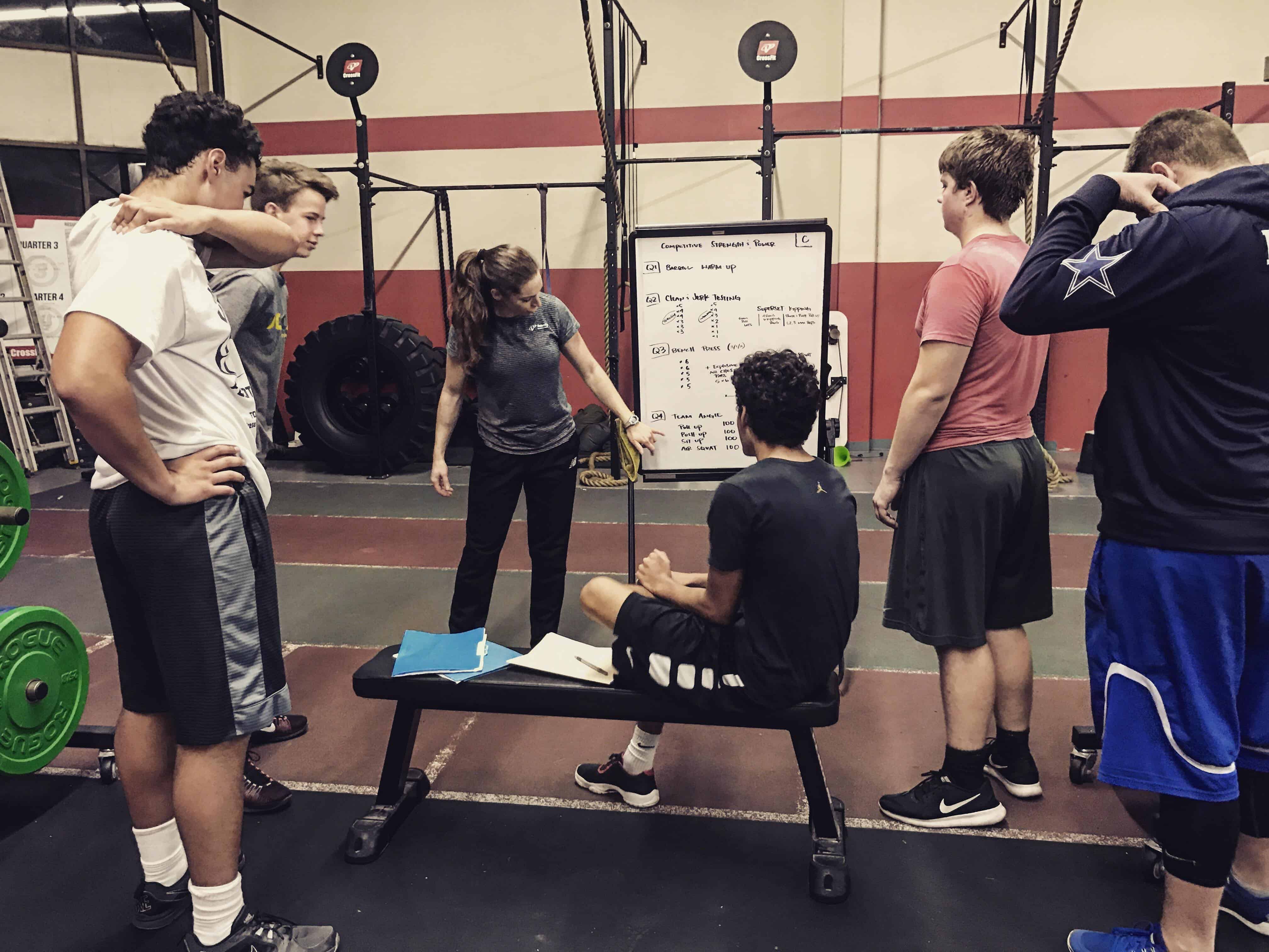
Why should your athlete participate in group training sessions?
Sports are about who can fail the least, and to get good at failing the least we must fail a lot at first. In a group setting you can fail, and are encouraged to fail as you receive corrections from a coach. Athletes in these types of settings get the added benefit of learning from other athletes and their failures. By learning from other athletes mistakes you avoid making the same errors, and with the extra failure the learning curve increases for each individual.
Training with a group also teaches teamwork and accountability. Most sports are team based sports, and the ability of a team to win isn’t based on one athlete’s abilities. As athletes, we need to be the best we can be, but we need to bring the rest of the team with us. Working within a group setting encourages young athletes to inspire others, and teaches them about leadership. Leadership values are hard to teach in a one-on-one setting because there are no other athletes there to fail with you.
The importance of competing is also emphasized in a group session because the athletes are constantly pushing each other both physically and mentally. Learning to compete is a crucial part of athletics. An athlete needs to have the knowledge of competing in order to compete with an opponent. These athletes first learn how to have healthy competition with their teammates, and then they learn to compete with themselves.
There are many benefits for athletes to participate in group training, and by subjecting your athlete to group sessions you are only benefiting them. Remember to keep the groups at a maximum of about 15 to 1 to make sure your athlete is receiving a good amount of attention. After learning how to work with a group your athlete will then be ready for any small group situations as well!
By using negative words like HAVE TO and CAN’T we vocalize our fear of failure. Teaching athletes to keep a positive and growth mindset is important because being an athlete means you will fail multiple times a day, and that’s okay! However, you must learn to fail, and not be afraid of that failure. Here are two words that athletes should avoid using to stay in the right mindset.
HAVE TO– Instead of saying have to, say you WANT TO. When we say, we HAVE TO do something we create a belief that someone is forcing us to do something. For example, when a coach gives an athlete a specific workout, and the athlete asks “do I HAVE TO?” This athlete is creating doubt, and does not have the desire to accomplish the workout or their goals. To have a productive training session change your word choice to WANT TO, and the overall atmosphere and morale of you and your teammates will increase. Have a drive and a WANT to work towards your goals, and not do something because someone is making you do it.
CAN’T-Instead of saying can’t, say not yet! This is the most used, and most hurtful, word to our goals and mindset. When we say, I CAN’T, we are telling our brain that our body will not be able to perform the action. We have put up a mental road block on our path towards success. By changing the outlook, and saying NOT YET to something, we are keeping our path clear to continue towards our goals. Coaches may even respond to you when you say can’t with “not with an attitude like that!” If something seems hard try it anyways because you never know what you are capable of until you try.
Are you having a hard time finishing your training sessions strong? Do you/or your athlete feel defeated before even attempting your session? Watch what you say, and try changing a few words in your training vocabulary. Teaching athletes to keep a positive and growth mindset is important for their mental health, and goals.
Failing is part of life and all sports. When we learn to fail, and learn to overcome that failure we learn to have resilience. When we get knocked down we learn to get back up!
We all go through times when things just don’t go our way. We try to break out of it, but no matter what we try we can’t seem to shake it. This could be in sports, in school, at work, or in the gym. It happens to even the best of us.
Here are three ways to help break you out of a slump:
Acknowledge the Slump
Accept it, don’t fight against it. Like getting stuck in a strong current, fighting the waves only tires you and worsens your chances of making it to shore. Fighting it can make a slump last longer and feel much worse. Ask yourself, what are my body and mind telling me? Acknowledge that maybe this is its way to tell you to slow down. The best athletes learn how to take advantage of the adversity that they face and come out stronger as a result.
Write It Out
Try a free-writing exercise where you spend 10 minutes writing whatever you want. The only rule is that you have to keep writing. More often than not, writing exercises like these can help you get to the bottom of any problem you might be having. It takes time to master, but having a daily journal like this can help you understand your habits over time. It is also quite valuable to look back and see if you have had this problem before, and how you dealt with it.
Positive Mental Attitude (PMA)
Don’t throw yourself a pity party. The only people that want to attend are the ones that want to tear you down. When you’re in a slump don’t give into it. Have a positive mental attitude and surround yourself with other like-minded individuals.
Remember everyone gets in a slump. Acknowledging that it happens is the first step to breaking out of it. Try free-writing exercises to discover your habits. This will help guide you in making the right adjustments to break those bad behaviors. Attack your slump head-on with a positive mental attitude and surround yourself with others that exude that same positivity and you’re sure to be a success.
When it comes to playing youth sports, the best predictor of success is not based off of an athlete’s physical abilities or skills. What really matters is which athlete is able to remain focused on the task at hand when they are tired. The more focused an athlete is, the more successful an athlete will be.
Look at a pitcher as he prepares to throw, he is focused on the catcher’s glove. Consider a weightlifter or gymnast, notice how calm they are before their event. They are totally locked into “the zone”.
So how do we teach our youth athletes to get into the zone and have laser sharp focus when they need it? Luckily, focus is something that can be trained.
As a coach, you must plan practices with the goal to keep athletes engaged. How do we do this? Here are some of our tricks:
Limit Distractions
One easy way to do this: NO CELL PHONES. Smartphones of any kind can dramatically decrease focus and productivity. To keep it simple, and increase focus, our rule is: Phones stay in the bags.
3 Words: Structure, Routine, Consistency.
Having a structured practice with little down time is necessary to keep athletes engaged and focused on the task at hand. When practices are consistently the same, athletes develop a routine. Routines are very important for helping an athlete increase focus. Let’s be honest, athletes are going to lose focus from time to time, so developing a strategy to regain focus is critical to help them get back into the zone. This is why a routine, or ritual, is important. For example: consider a baseball player’s at-bat routine. After each pitch, they step out of the box and adjust their gloves and helmet the same way before stepping back into the box. They consistently do the same thing over and over. This helps them maintain focus.
Understand Different Learning Styles
Each athlete is different and they learn in different ways. There are three types of learning styles: audio (hearing), visual (seeing), and kinesthetic (doing). Coaches and parents need to be aware of the possibility that the information they are presenting their athlete might not be done so in the style of learning that they understand best. In this case, the athlete is less likely to pay attention. Engaging your athletes in all of the different learning styles helps them to remain focused.
Find a Balance
Challenge is an integral part of your athlete’s overall improvement. However, keeping these challenges in line with their skill level is important to keep them from losing focus. It’s impossible to stay focused on a task that is way too challenging. Coaches need to create attainable challenges their athlete’s in order to keep them focused on completing the task at hand.
Don’t Over-Coach
Many times as a coach we feel the need to tell our athletes everything they are supposed to do and exactly how to do it. This can be information-overload for an athlete. When there are too many things to focus on, the athlete is overwhelmed and breaks down. Giving them one task to focus on is the best way to see them succeed. Once they’ve mastered the initial task, you can begin to add more.
Keep it Fun
Sports are fun. Plain and simple. Let’s keep it that way. If an athlete is not having fun, they will be less likely to stay focused and and more likely to disengage.
In competitive athletic environments where strength, speed and skill development are constantly compared to teammates and competitors, off-seasons are extremely important for athletes.
To be clear, an off-season does not give an athlete license to disregard all healthy and active choices, it is productive time spent away from a given sport in order to reflect, recover and re-up for the next season with energy and excitement. Without this time, athletes can lose passion, concentration and can very quickly burn out.
Here are three ways to determine if your athlete needs an off-season:
Do they play their organized sport or sports year-round?
If yes, they need an off-season. If professional athletes don’t practice and compete in their sport year-round, why should your athlete?
Do you not plan family vacations because you don’t want to pull your athlete out of their sport?
If yes, they need an off-season. In order to train and compete at the highest levels, all athletes — and family members, too — need some good-quality R&R. Rest and recuperation are critical for developing athletes.
Do they only play one sport?
If yes, they need an off-season. Let another sport or structured athletic performance program act as their off-season. In the words of strength and conditioning expert Guido Van Ryssegem, “Movement variability is the oil to the central nervous system.” Athletes can make the most out of their off-season by training speed, strength and skills with the elite coaches at Velocity Sports Performance.